
Spinning Fibre & Batts
Spinning fibre and batts from the studio’s destash: combed top from Southern Cross Fibre and Spunky Eclectic fibre clubs, breed wools such as Shetland, Corriedale and BFL, and art batts with silk and sparkle.
Showing 1–16 of 25 results
-
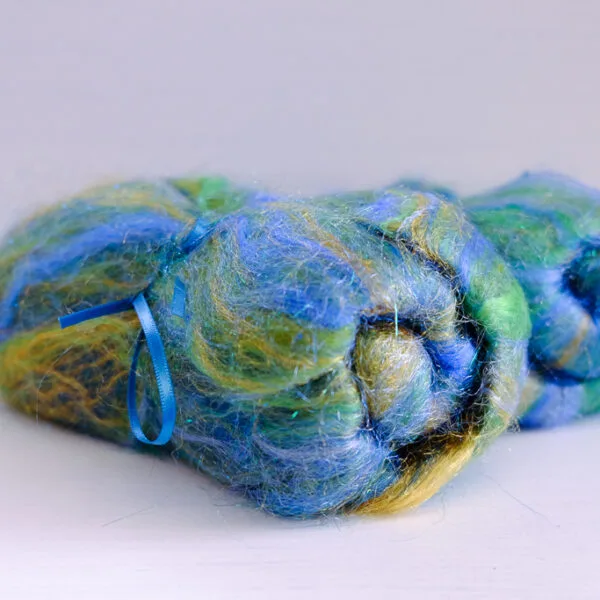 lot of 2byrebekahwithlove batt – tropicsbfl, tussah silk, firestar, angel… · 120 g for the pair$28.00fibre
-
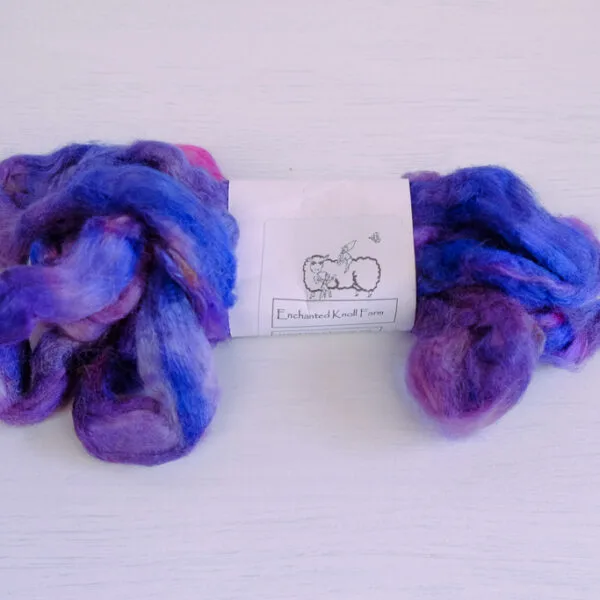 enchanted knoll farm – forget me not100% tussah silk · 28 g$18.00fibre
-
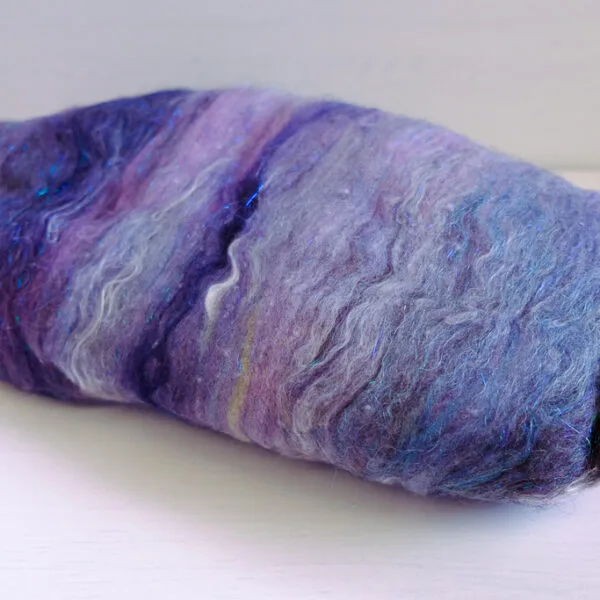 frankie's whimsy batt – stormycorriedale, shetland, bfl, alpaca… · 110 g$28.00fibre
-
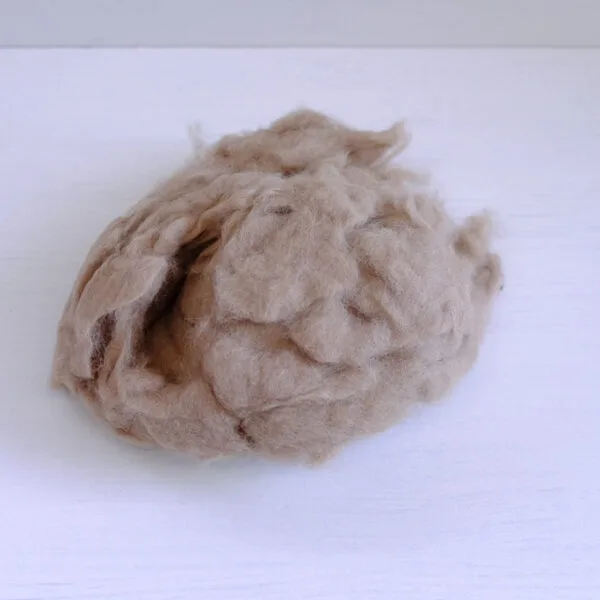 ixchelbunny – natural mink100% mink down · 25 g$13.50fibre
-
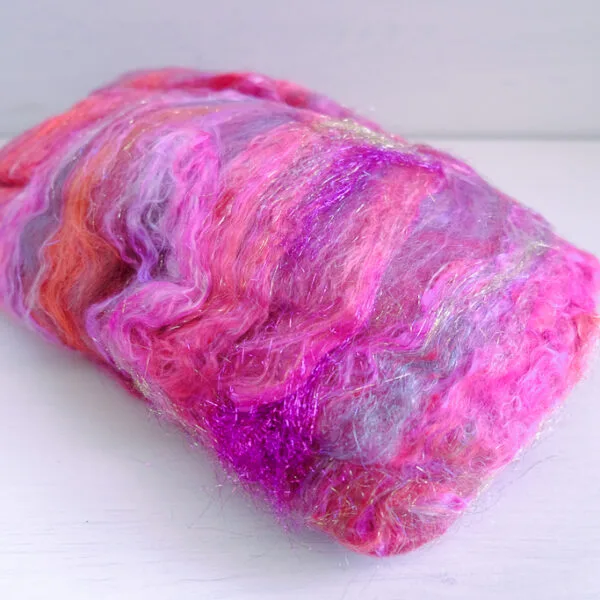 ixchelbunny funky bunny batt – fire stonemerino, angora, yak, mohair, peac… · 110 g$30.00fibre
-
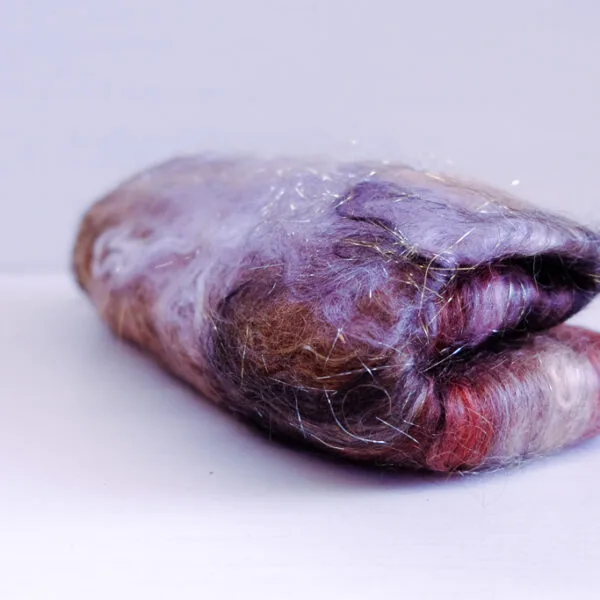 jenny's fields fiber batt – dubstepkid mohair, angelina, sparkle, wo… · 85 g$18.00fibre
-
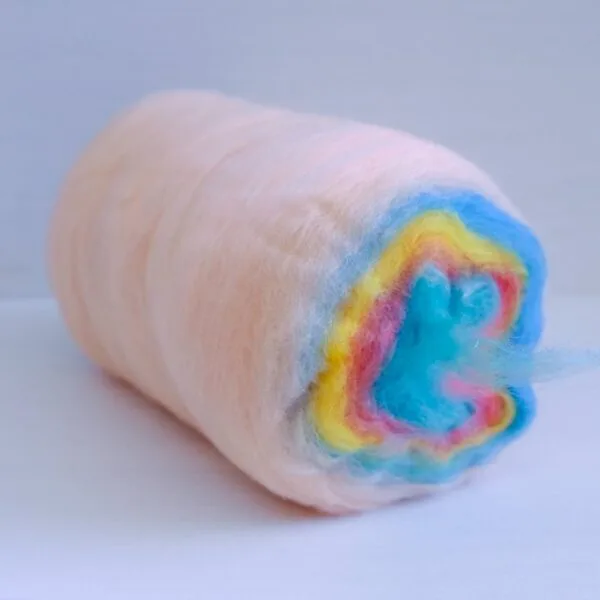 loop bullseye bump – pearl fishmerino, bamboo, tussah silk, ange… · 142 g$35.00fibre
-
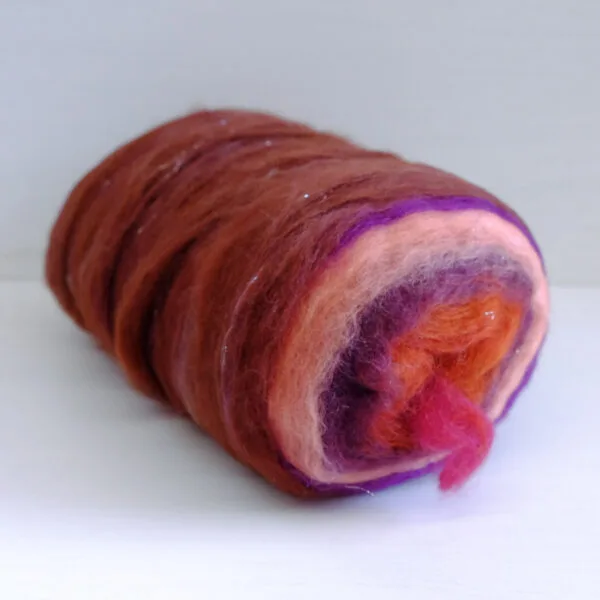 loop bullseye bump – september sunsetmerino, corriedale, nylon, bamboo… · 170 g$40.00fibre
-
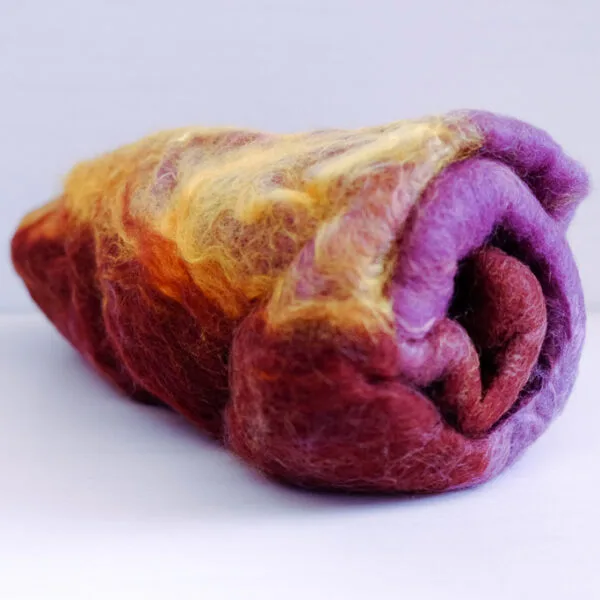 mystery bag battunlabelled mystery batt · 106 g$15.00fibre
-
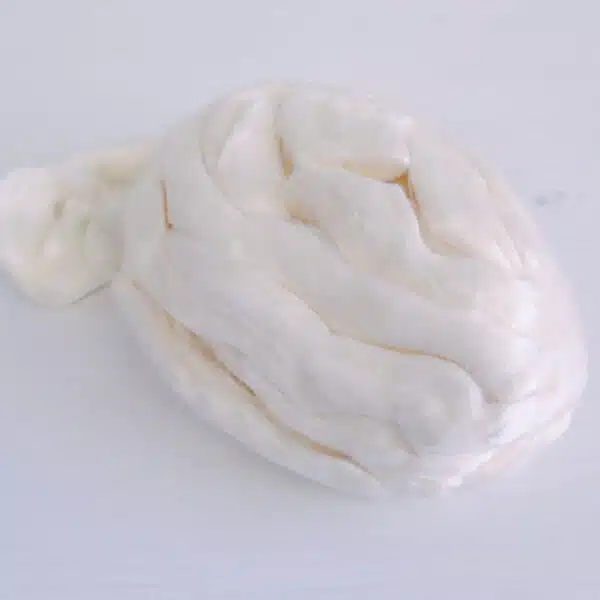 pure silk fibre – natural100% silk · 100 g$35.00fibre
-
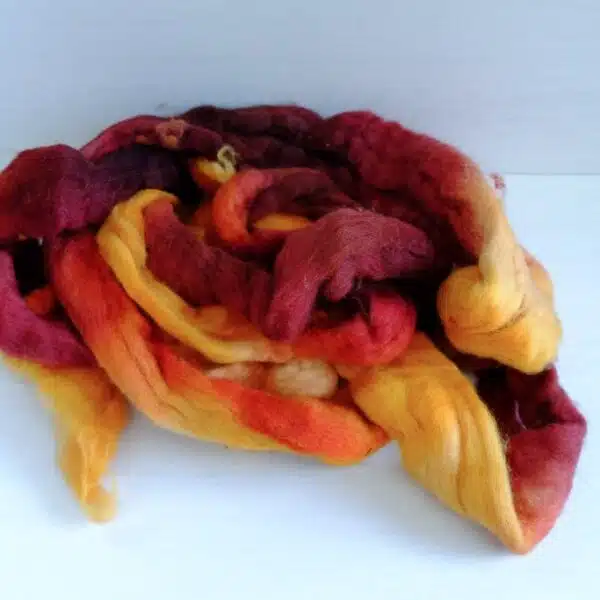 southern cross fibre – fall backbfl wool · under 115 g$35.00fibre
-
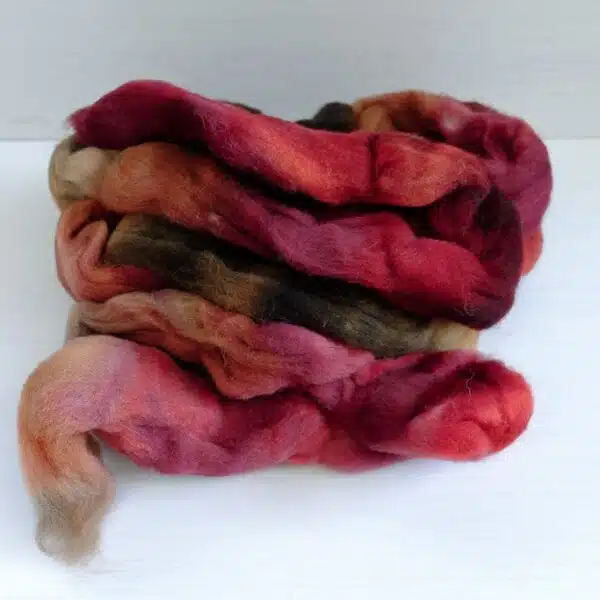 southern cross fibre – huntersouthdown wool · 110 g$35.00fibre
-
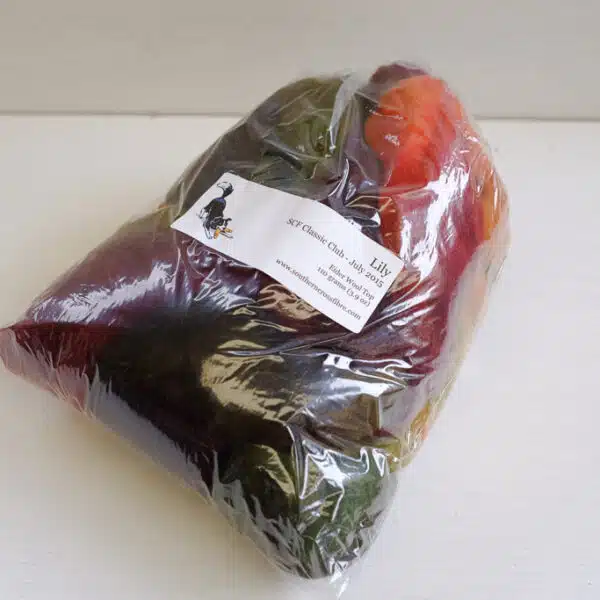 southern cross fibre – lilyeider · 110 g$22.00fibre
-
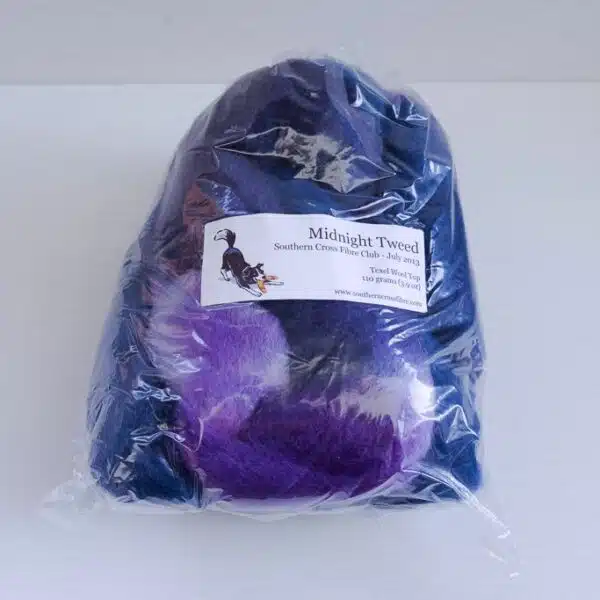 southern cross fibre – midnight tweedtexel wool · 110 g$35.00fibre
-
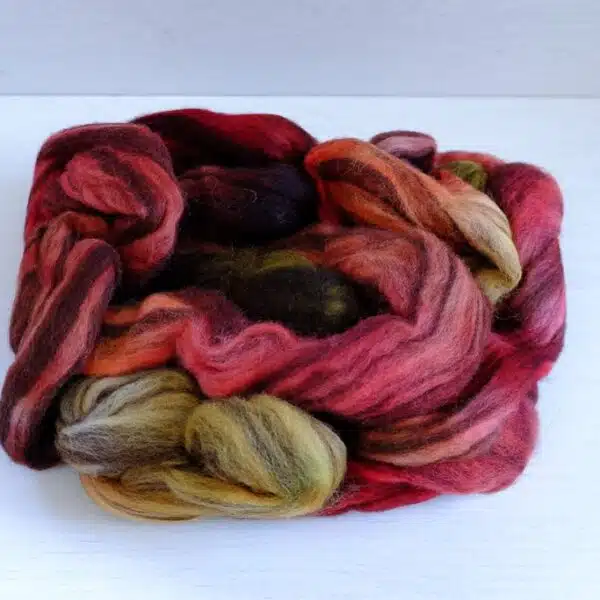 southern cross fibre – poppymixed corriedale wool · 110 g$35.00fibre
-
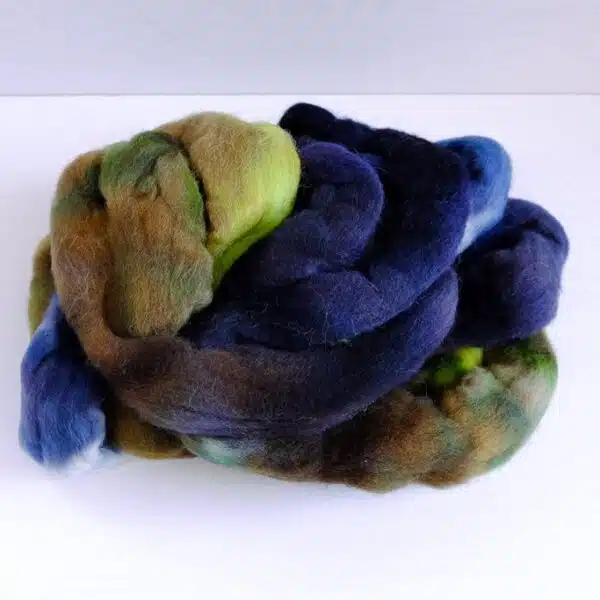 southern cross fibre – submergeshetland wool · 110 g$35.00fibre
Buying spinning fibre and batts
This is spinning fibre from the studio's stash: hand-dyed combed top from Southern Cross Fibre and Spunky Eclectic fibre club shipments, art batts from small carders, and natural silk and mink for blending. Club fibre listings give the month it was shipped, along with the breed or blend and the weight in grams.
Breed wools spin quite differently from each other. Corriedale and Polwarth are soft and easy to draft, a good choice if you're still learning. BFL and Masham are long and lustrous, with a smooth drape. Shetland, Texel, Southdown and other Down-type wools are springy and lofty, good for warm, hard-wearing yarn.
Hand-dyed top can be spun to keep long colour runs, for example by chain-plying, or split lengthwise and spun as a fractal 2-ply so the colours shift at different rates. Batts can be spun straight from the batt, pulled into a roving, or torn into strips and rolled into rolags for a woollen yarn. Around 100 to 120 g usually spins enough for a hat, a pair of mitts or a shawlette.
What is the difference between combed top and a batt?
Combed top has the fibres lined up in one direction, which makes a smooth, dense yarn. A batt comes off a drum carder with the fibres more jumbled and is often a blend of several fibres and sparkle; it spins into a loftier, more textured yarn.
Is this fibre suitable for a beginner spinner?
The wool tops, especially Corriedale and Polwarth, are. Silk, mink and heavily textured art batts are easier once you're comfortable drafting.